Sialkot’s export factories run on tight margins, and in 2026 the single biggest threat to those margins isn’t raw material prices — it’s the electricity bill. Surgical instrument workshops, leather units, and sports-goods exporters across the city are now treating solar power as a production-line decision, not a lifestyle upgrade. If you manufacture for export, a solar company in Sialkot can cut your per-unit energy cost enough to change your quoted price to foreign buyers.
Why a Solar Company in Sialkot Matters for Export Factories
Sialkot’s grid supply has always been a headache for small and mid-size exporters. Voltage fluctuations damage stitching machines and CNC tools, and scheduled load-shedding during peak export seasons forces costly generator runs. Diesel generators now cost more to run per unit than solar-plus-battery systems, which is why so many factory owners are switching this year.
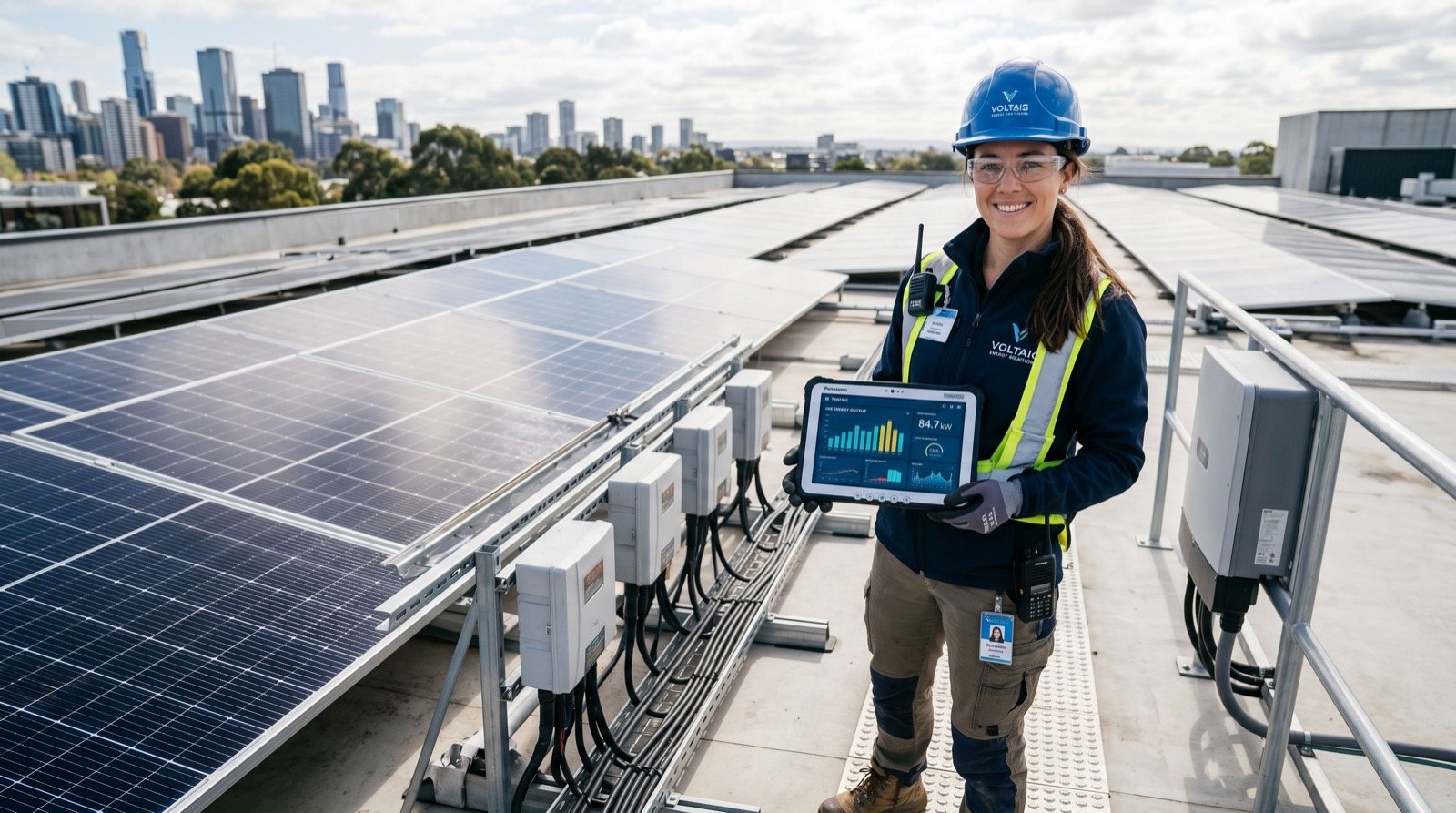
A right-sized solar company in Sialkot will assess your shift pattern — many units run two or three shifts — before recommending a system. A factory running daytime shifts only needs a very different setup than one running into the evening.
How Much Can a Factory Actually Save?
Average commercial electricity tariffs in Punjab have continued to climb through 2026, and industrial consumers on high-slab tariffs feel it hardest. A well-designed rooftop system covering 60-80% of daytime load typically pays for itself within 3 to 4 years for commercial users, after which the power is effectively free for the next 20+ years of panel life.
| Factory Size | Typical System Size | Monthly Bill Before | Monthly Bill After Solar |
|---|---|---|---|
| Small workshop | 10-15 kW | PKR 180,000 | PKR 60,000 |
| Mid-size export unit | 30-50 kW | PKR 550,000 | PKR 180,000 |
| Large stitching/leather factory | 80-120 kW | PKR 1,200,000 | PKR 420,000 |
What Equipment Actually Matters for Factory Installs?
Not every solar package suits an industrial load. For factories, the inverter’s surge capacity matters more than panel brand, because stitching machines and compressors draw heavy startup current. A good installer will oversize the inverter slightly rather than the panel array, which is the opposite of what most residential packages do.
- Request a load audit before any quote — not after
- Ask for inverter surge rating, not just continuous output rating
- Confirm whether the quote includes AVR/stabilizer protection for sensitive machines
- Check the net metering paperwork timeline with your DISCO (usually 4-8 weeks in Sialkot)
- Get a written performance guarantee, not just a product warranty
Many factory owners rely on dependable specialists to handle both the technical rollout and the paperwork side of a transition like this, since DISCO net-metering approval can stall a project for months if filed incorrectly.
Comparing Sialkot to Other Markets: The Quetta Angle
Interestingly, pricing and payback curves look very different once you leave Punjab. A solar company in Quetta deals with colder winters, higher altitude, and different grid reliability issues than Sialkot’s humid, flat terrain. Panel efficiency actually improves slightly in cooler climates, but snow and dust accumulation requires different maintenance schedules. Exporters with warehouses or buying offices in both cities should not assume one system design works for both locations.
Financing Options That Make Sense for Export Units in 2026
Most Sialkot exporters don’t pay cash for a solar system upfront. Commercial banks and leasing companies in Pakistan now offer dedicated green energy financing lines with tenors of 3 to 5 years, and several installers bundle financing directly into their quote. The monthly repayment on a financed system is frequently lower than the monthly electricity savings, which means the factory starts generating positive cash flow from month one instead of waiting years to break even.
Before choosing a financing route, compare the total cost of capital against a straight cash purchase. A 5-year loan at a high markup rate can erase a chunk of your savings, so ask any solar company in Sialkot whether they have tie-ups with banks offering subsidized green financing rates, since several schemes specifically target export-oriented SMEs.
Seasonal Production and Solar Output: Planning Around Export Cycles
Sialkot’s export factories often run extended shifts ahead of peak ordering seasons for sporting goods and leather products. This is exactly when electricity demand — and grid instability — spikes. A solar system sized for average daily load may underperform during these high-output weeks unless the installer specifically accounts for seasonal peaks in the original design.
Smart factory owners request a system sized not just for “average” load but for the busiest production month of the year, even if that means a slightly larger upfront investment. The extra capacity pays for itself during exactly the weeks when generator fuel costs would otherwise spike the hardest.
What Should a Factory Owner Check Before Signing a Contract?
Due diligence protects your investment. Before signing with any installer, verify three things: their AEDB (Alternative Energy Development Board) registration status, at least three verifiable completed installations in Sialkot’s industrial zones, and whether they offer a monitoring dashboard so you can track actual output against promised output.
According to IRENA’s solar energy research, commercial and industrial rooftop solar remains one of the fastest-payback renewable investments globally, and Pakistan’s high commercial tariffs make the math even more favorable than in many other countries.
Frequently Asked Questions
Is solar worth it for a small Sialkot workshop, not just large factories?
Yes. Even a 10 kW system on a small workshop can offset 50-70% of daytime grid consumption, and smaller systems are approved faster by the DISCO since they fall under a simpler net-metering category.
How long does installation take for a factory-scale system?
Physical installation for a mid-size commercial system usually takes 1-3 weeks. The net-metering approval process with the local DISCO typically adds another 4-8 weeks on top of that, so plan your production calendar accordingly.
Do solar panels reduce machine damage from voltage fluctuation?
Combined with a proper inverter and stabilizer setup, yes — many factory owners report fewer machine faults after switching, because solar-fed power through a quality inverter is more stable than raw grid supply during load-shedding hours.
What happens on cloudy days or during winter?
A grid-tied system without batteries simply draws more from the grid on low-sun days, so production never stops. Factories wanting full backup add batteries sized to cover peak evening shift hours.
Final Thoughts for 2026
For Sialkot’s export sector, solar isn’t a green initiative anymore — it’s a cost-control strategy that directly affects your competitiveness against factories in other countries. Get a proper load audit, compare at least two quotes, and confirm net-metering timelines before you commit production schedules around an installation date.