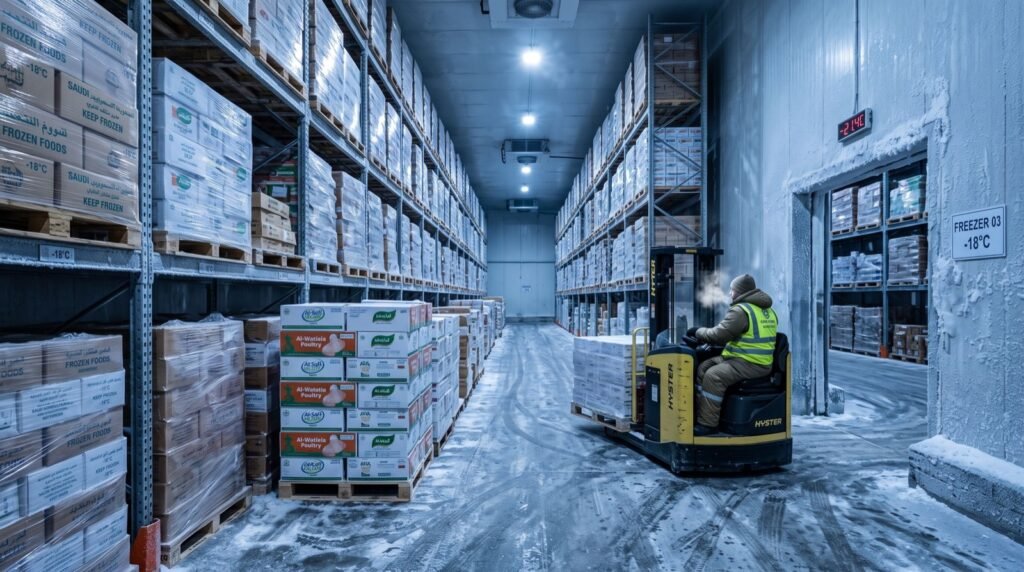
Chilled Storage: The Complete 2026 Guide to Keeping Goods Fresh
Behind every crisp salad, fresh carton of milk, and perfectly preserved vaccine sits a quiet hero: Chilled Storage. This is the temperature band between freezing and ambient — typically 0°C to 8°C — where fresh food, pharmaceuticals, and sensitive goods stay safe without the texture damage that freezing can cause. In 2026, as Saudi Arabia’s fresh-food retail and health sectors grow rapidly, understanding how chilled warehousing works has become essential for any business that handles perishables.
This guide covers how chilled warehousing differs from frozen, which products depend on it, and how to choose a facility that keeps your cold chain unbroken from supplier to shelf.
What is chilled storage and how does it differ from frozen?
This method holds products cold but above their freezing point, preserving them in a near-fresh state. Freezing, by contrast, drops goods to -18°C or below, halting microbial activity entirely but changing the cellular structure of many foods. The right choice depends on the product and how long you need to keep it.
Here is the practical distinction every operator should know:
- Chilled (0–8°C) keeps fresh produce, dairy, and prepared foods usable for days to a few weeks without texture loss.
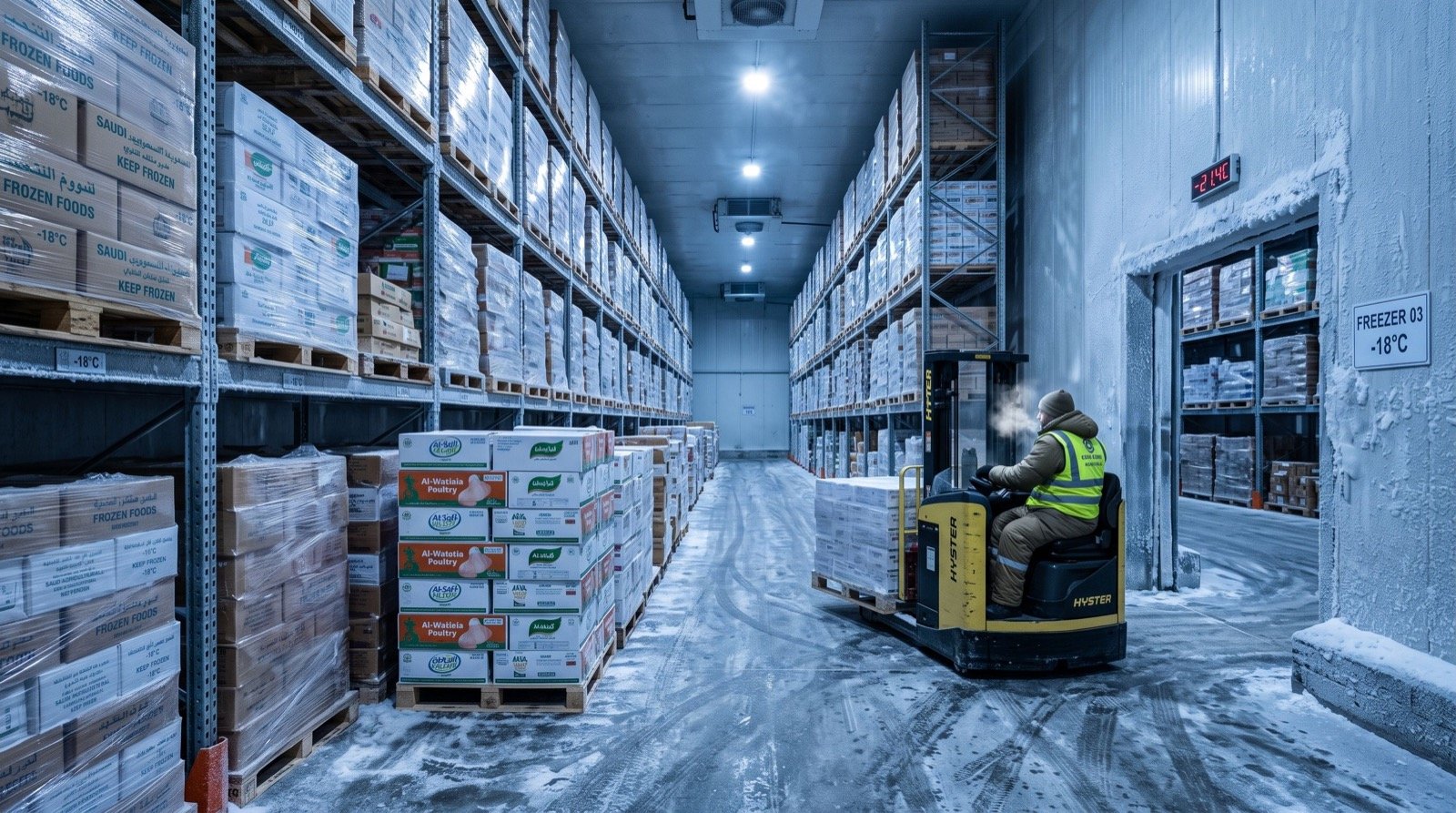
- Frozen (-18°C and below) preserves goods for months but can alter texture on thawing.
Many businesses need both, which is why integrated facilities offer chilled and frozen zones side by side. A dairy distributor, for example, might keep fresh milk in chilled space while holding ice cream in a dedicated Frozen Storage in Riyadh chamber within the same building.
Which products depend on refrigerated storage?
The list is longer than most people expect, spanning food, health, and even floral sectors. The common requirement is a stable, cool environment that slows spoilage without freezing.
| Product category | Recommended temperature | Typical shelf life (chilled) |
|---|---|---|
| Fresh dairy (milk, yoghurt) | 1–4°C | 7–21 days |
| Fresh meat & poultry | 0–2°C | 3–7 days |
| Fruits & vegetables | 2–8°C | 5–21 days |
| Prepared / ready meals | 0–5°C | 3–7 days |
| Pharmaceuticals & vaccines | 2–8°C | Per manufacturer |
The 2–8°C band is especially critical for medicines. The World Health Organization sets detailed guidance on maintaining this range throughout the supply chain, and you can review the principles through the World Health Organization, whose cold-chain standards are referenced worldwide.
Why temperature stability matters more than the number
A common misconception is that hitting a target temperature once is enough. In reality, stability is what preserves product. A chiller that swings between 2°C and 10°C several times a day does more damage than one that holds a steady 6°C, because each warm excursion shortens shelf life and invites bacterial growth.
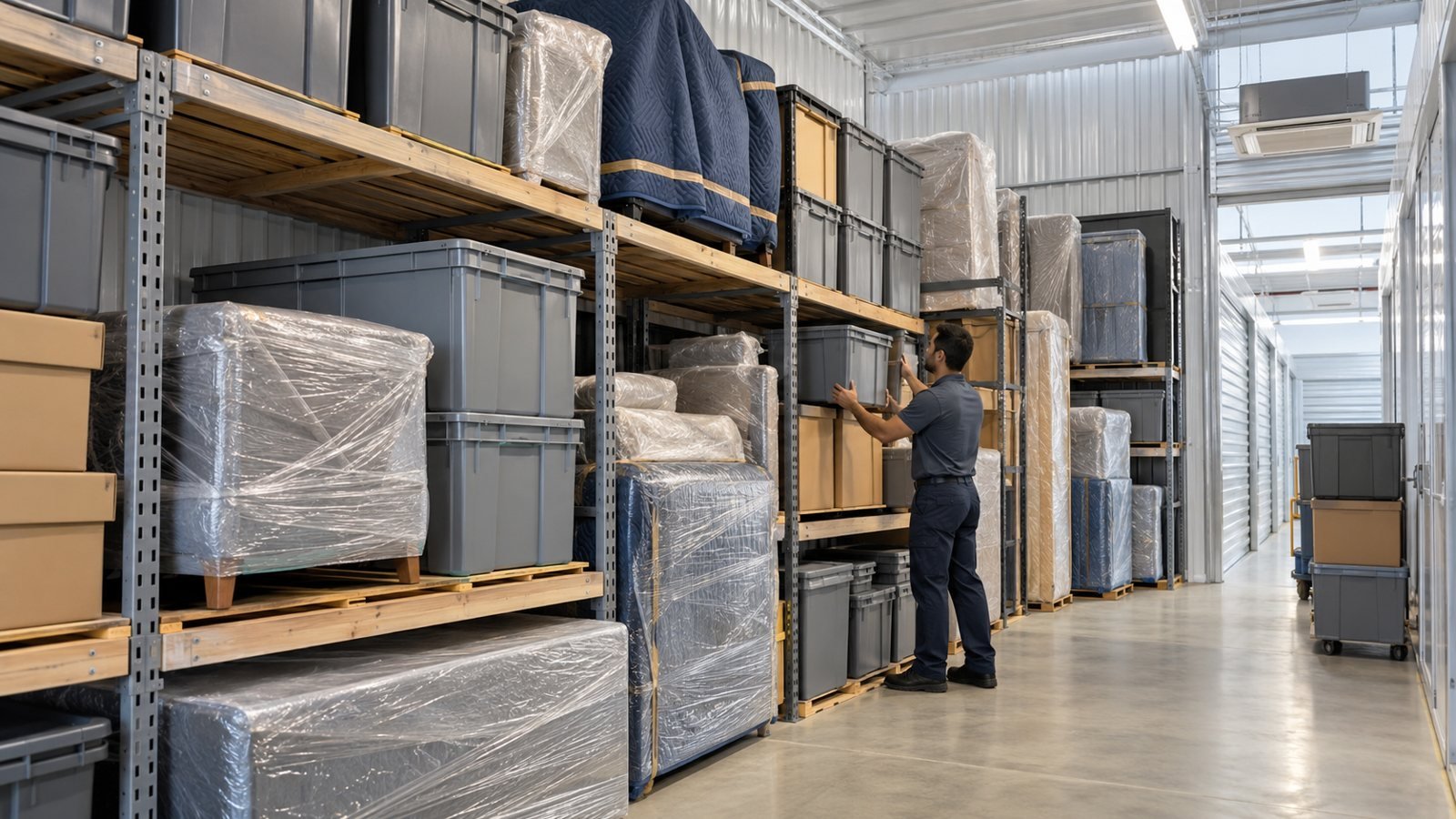
Quality Chilled Storage is engineered to minimise these swings. Key design features include:
- High-efficiency refrigeration sized for the Kingdom’s summer heat load.
- Continuous monitoring with alarms that flag any drift outside the set band.
- Air-curtain or strip-curtain doorways that limit warm-air ingress during picking.
- Backup power to protect stock during grid interruptions.
- Zoned chambers so a 2°C pharmaceutical room never shares air with an 8°C produce room.
Engineering standards for these systems are maintained by industry bodies such as ASHRAE, whose refrigeration guidance informs how modern cold stores are specified and run.
The Riyadh advantage for chilled logistics
Riyadh’s position as the Kingdom’s central population and distribution hub makes it a natural base for chilled warehousing. Goods stored here can reach a vast consumer base quickly, which is exactly what fresh and chilled products need — minimal time between storage and sale.
The capital’s growth under Vision 2030 has driven demand for integrated facilities that combine chilled and frozen capacity. A food brand can centralise its cold inventory in one Riyadh location, serving both chilled daily deliveries and longer-term frozen reserves. This consolidation cuts transport legs and shrinks the windows where product sits unrefrigerated.
A first-hand tip from distribution managers: the biggest avoidable losses happen at the dock, not in the chamber. Insist on refrigerated or sealed loading bays so product never bakes on an open dock during a Riyadh afternoon. Partnering with reputable service experts who design their dock workflow around temperature protection is what keeps the cold chain genuinely unbroken.
How to evaluate a cold storage provider
Before committing inventory, run each candidate through a short due-diligence list. The answers reveal whether a facility truly protects your goods or merely cools them.
- Does the contract specify a temperature band and guarantee it in writing?
- Is monitoring 24/7, and will you receive the same alerts the operator does?
- What is the backup-power transfer time if the grid fails?
- Are chilled and frozen zones physically separated with independent controls?
- Can the provider scale your space seasonally without penalty?
Frequently Asked Questions
What temperature range defines chilled storage?
Chilled warehousing generally runs between 0°C and 8°C, cold enough to slow spoilage and bacterial growth but above freezing so products keep their fresh texture. Specific items like pharmaceuticals require the tighter 2–8°C band.
What is the difference between chilled and frozen storage?
Chilled space keeps goods cold but unfrozen for short-term freshness, while frozen storage holds products at -18°C or below for long-term preservation. Many facilities offer both so businesses can store each product at its ideal temperature.
How long can food stay in chilled conditions?
It varies by product. Fresh meat may last only a few days, while some dairy and produce keep for two to three weeks. Steady temperature and good stock rotation are what extend usable life to the maximum.
Why is backup power important for cold storage?
A chiller without power warms quickly, putting perishable and pharmaceutical stock at risk within hours. Automatic backup generators maintain the temperature during outages, which in a hot climate is essential rather than optional.
Conclusion
Chilled warehousing is the invisible infrastructure that keeps fresh food wholesome and medicines effective. By understanding the right temperature bands, prioritising stability over a one-off reading, and choosing a facility with real monitoring and backup power, businesses protect both quality and compliance. As Riyadh and the wider Kingdom expand their fresh-food and health sectors in 2026, dependable Chilled Storage has become a competitive necessity rather than a convenience. Assess your current provider against the checklist above, and secure the steady, unbroken cold chain your products depend on.